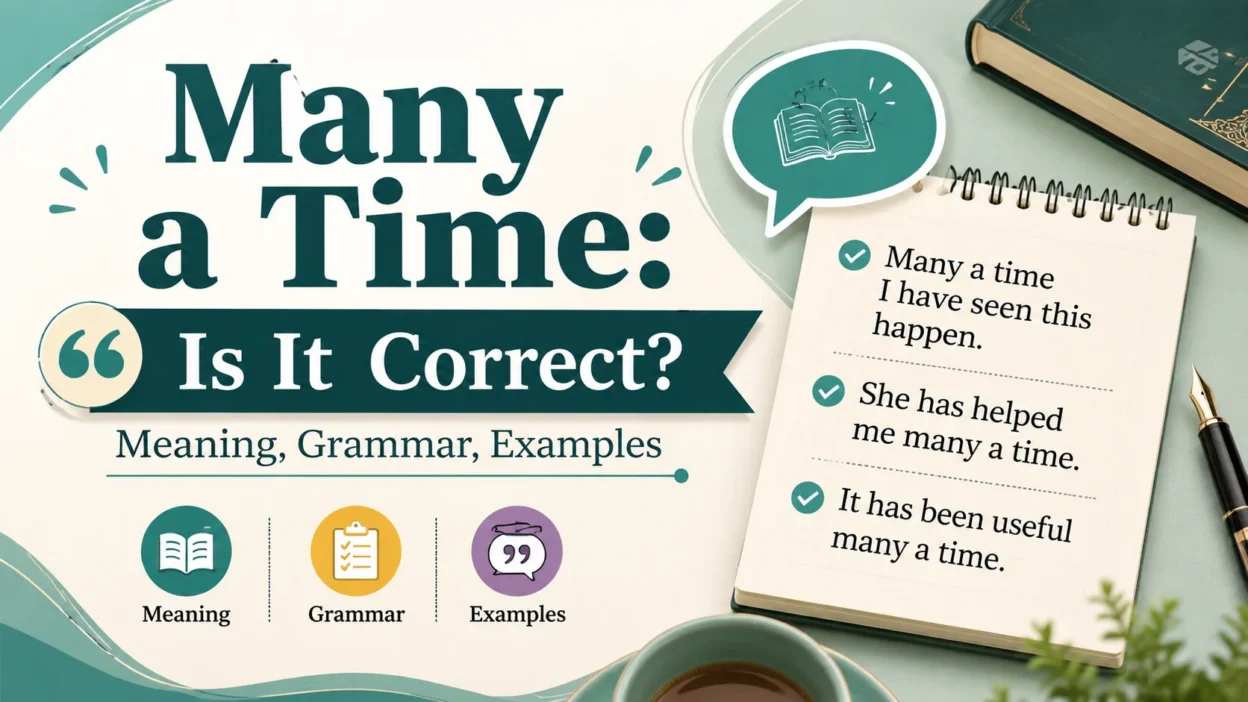
Grammar11 Min Read Ethan LexfordonAugust 14, 2026 Many a Time: Is It Correct? Meaning, Grammar, Examples “Many A Time”? can look unusual because many normally appear with a plural form, while time is singular. However, this English expression is completely…
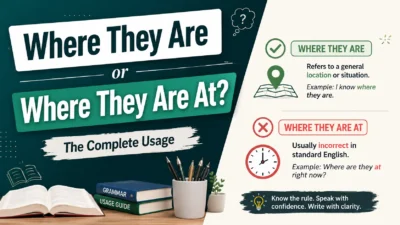
12 Min Read Parker WhitmanonAugust 14, 2026 Where They Are or Where They Are At? The Complete Usage When you’re unsure about Where They Are or Where They Are At?, choose… Grammar
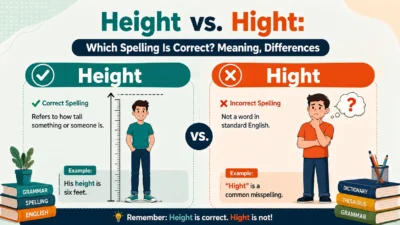
11 Min Read Maxwell GrantonAugust 14, 2026 Height vs. Hight: Which Spelling Is Correct? Meaning, Differences Height vs. Hight can confuse English learners because both words look… Grammar
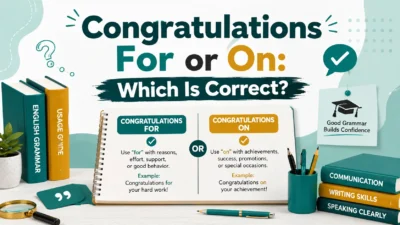
8 Min Read Ethan LexfordonAugust 13, 2026 Congratulations For or Congratulations On: Which Is Correct? Congratulations For or Congratulations On can confuse English learners,… Grammar
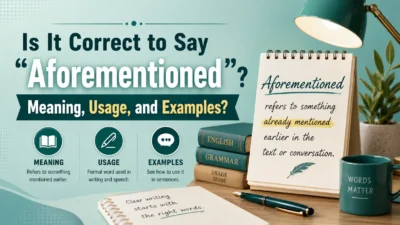
Grammar7 Min Read Maxwell GrantonAugust 13, 2026 Is It Correct to Say “Aforementioned”? Meaning, Usage, and Examples? Is It Correct to Say “Aforementioned”? Yes, aforementioned is a formal expression used in English language writing to refer to something… Discover More
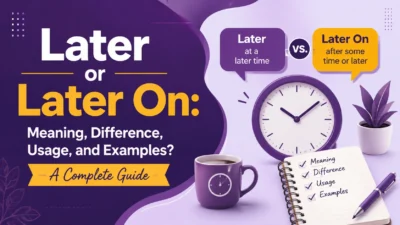
Grammar8 Min Read Parker WhitmanonAugust 13, 2026 Later or Later On: Meaning, Difference, Usage, and Examples? Later or Later On can confuse English learners because both expressions refer to a future time. Although their meaning is similar, the right… Discover More
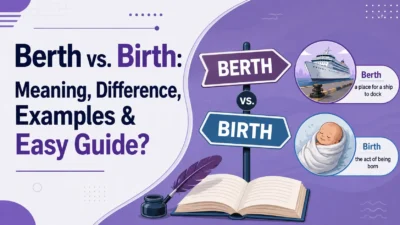
Grammar9 Min Read Ethan LexfordonAugust 12, 2026 Berth vs. Birth: Meaning, Difference, Examples & Easy Guide? “Berth” vs. “birth” can be confusing because these homophones have a similar sound and identical pronunciation, but… Discover More
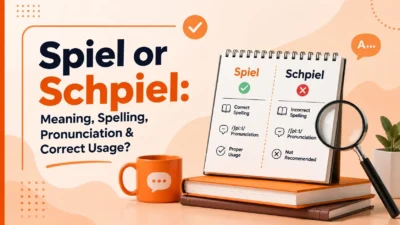
Grammar8 Min Read Maxwell GrantonAugust 12, 2026 Spiel or Schpiel: Meaning, Spelling, Pronunciation & Correct Usage? Spiel or Schpiel can confuse English learners because both have a similar sound, but Spiel is the widely accepted spelling in modern English.… Discover More
Grammar8 Min Read Parker WhitmanonAugust 12, 2026 Realise or Realize: Which Spelling Is Correct? ‘Realise’ or ‘Realize’ can be confusing because both forms are correct, have the same meaning, and sound the same. Realise is preferred in… Discover More
Grammar8 Min Read Ethan LexfordonAugust 11, 2026 Deduce vs. Induce: Meaning, Differences, Examples & Reasoning Guide? Deduce vs. Induce becomes easier when you understand the direction of reasoning. Deduction uses known facts, rules, and a general principle to… Discover More
Grammar8 Min Read Maxwell GrantonAugust 11, 2026 Relate To or Relate With: What’s the Difference? Relate to or Relate With can confuse English learners because both phrases may look interchangeable. In standard modern English, Relate To is… Discover More
Grammar7 Min Read Parker WhitmanonAugust 11, 2026 Alternative Of, Alternative For, or Alternative To: Which Is Correct? Alternative Of, Alternative For, or Alternative To can confuse English learners because these expressions aren’t always interchangeable.… Discover More
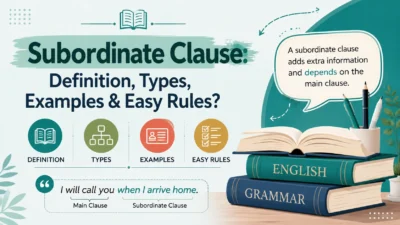
Grammar10 Min Read Ethan LexfordonAugust 10, 2026 Subordinate Clause: Definition, Types, Examples & Easy Rules? A Subordinate Clause contains a subject and verb, but it can’t form a complete sentence alone. It depends on a main clause to express a… Discover More
Grammar10 Min Read Parker WhitmanonAugust 10, 2026 Intelligent vs. Intellectual: What’s the Difference? Intelligent vs. Intellectual shows the difference between mental ability and interest in ideas, learning, and knowledge. An intelligent person… Discover More